By hand, at the bench
Repaired the way it was made
Every repair is done by hand with a needle and matched yarn — the very methods the rug was made with. Nothing is glued, taped, or handed to an outside workroom.
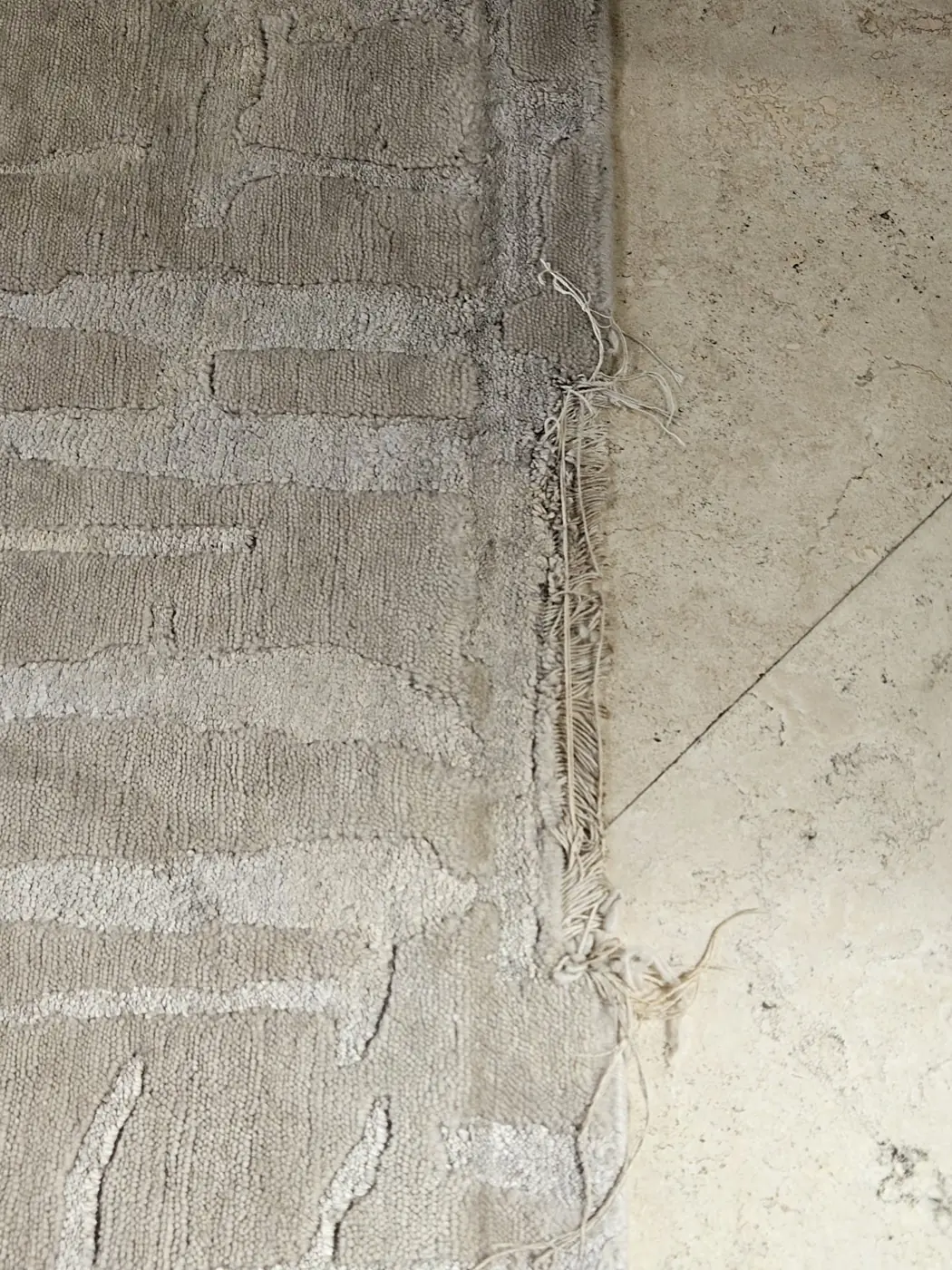
A worn fringe or a small hole doesn’t mean the rug is finished. We rebuild rugs by hand at our own Parkland plant — the same place they’re washed — so the fix matches the weave instead of covering it.
Small now, or big later
A rug unravels from its edges in. The knots at the end are locked in place by the fringe and the side cords; once those give way, the pile beside them has nothing holding it and starts to walk off the rug a row at a time.
Caught early, a loosening fringe or a fraying edge is a quick, contained repair. Left through another season of foot traffic in a busy Parkland household, that same edge becomes lost knots that have to be rewoven — far more work, and far more cost.
The cheapest repair is almost always the one you do first.
So when early wear turns up during a cleaning inspection on a busy Parkland household’s rug, we flag it — not to sell you more, but because a stitch today spares a reweave down the road.
By hand, at the bench
Every repair is done by hand with a needle and matched yarn — the very methods the rug was made with. Nothing is glued, taped, or handed to an outside workroom.
Done in-house
Fringe isn’t trim — it’s the rug’s foundation showing at the ends. We tie down a loosening fringe or rebuild one that’s gone so the end knots stay locked.
The side cords absorb the punishment from vacuums and furniture dragged across the hard tile floors common in Parkland homes. We re-wrap and re-anchor worn edges by hand before the pile alongside them starts to unravel.
A hole or a scorch is rewoven knot by knot in matched wool, tracing the original pattern so the mend disappears into the design instead of sitting on top of it.
Moths eat wool from the underside, out of sight. We deal with the infestation first, then reweave the grazed and hollowed areas back to full pile.
Left damp against the tile floors common in Parkland homes, a rug can rot at the foundation until it splits. We gauge how far it has crept and rebuild the sound sections still worth saving.
A rug can be gently shortened or narrowed to suit a room, and a worn-out antique revived through full restoration — each option measured against what the rug is genuinely worth.
Keep it off the bench
A few small habits do most of the work. Rotate the rug a couple of times a year so one path doesn’t take all the wear, and use a proper pad underneath — it stops the rug sliding and cushions the foundation against the hard tile most Parkland homes are built on.
Keep it dry: wipe up spills fast and never let a wet rug sit, because our humidity turns lingering damp into rot and mildew. And vacuum gently without running the beater bar over the fringe, which is where the unraveling usually starts.
The honest part
Yes — straight out. Some rugs are worth far more than a repair would ever cost; others are worth less than the hours a proper fix demands. We’ll tell you which yours is before you spend a thing.
An honest rug man will steer you away from a repair as willingly as toward one.
If a rug holds real sentimental weight, the decision is yours to make — but you’ll make it knowing the honest cost and the honest result, not a pitch.
Free assessment, zero pressure
Send us a few details and we’ll collect the rug in Parkland, look it over, and give you a straight answer on the repair before any work begins.