The wash floor, in two frames
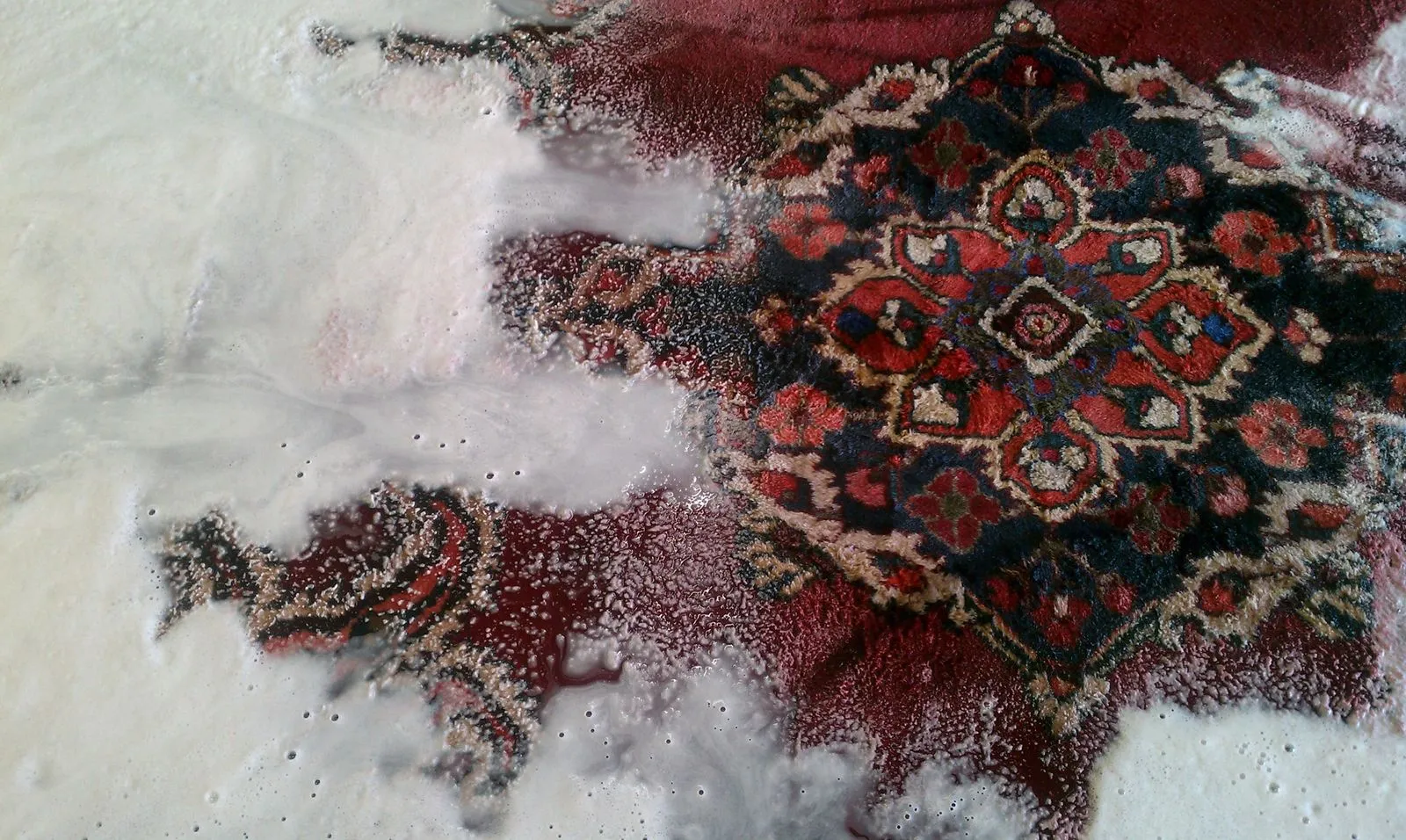
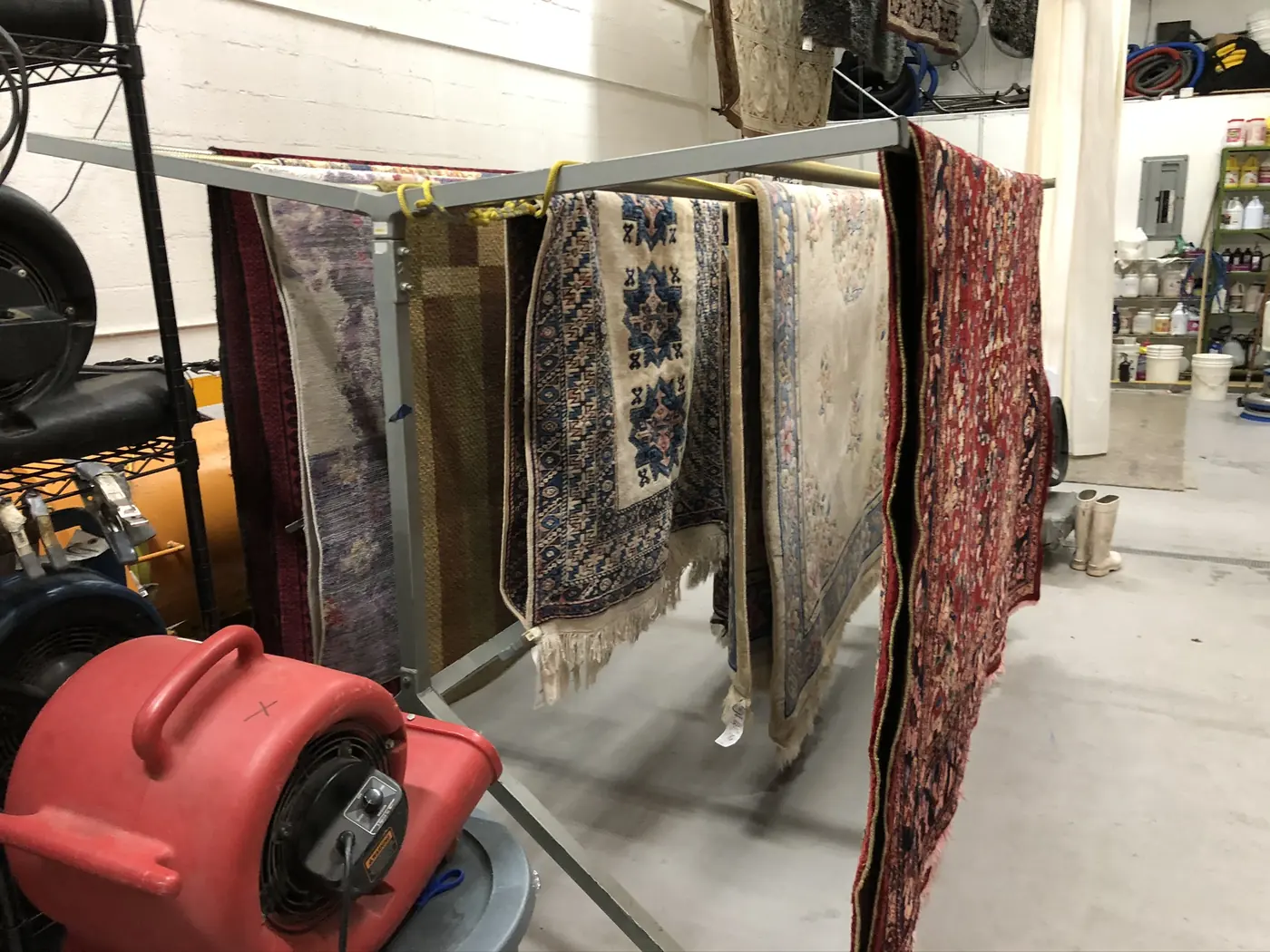
No two rugs arrive in the same shape, so none of them are treated the same way. Here is exactly what happens between the moment we collect your rug in Parkland and the moment we set it back down in your home.
Step one, always
Because the rug tells us how to clean it, not the other way around. When we collect a rug in Heron Bay or Cascata, the first thing that happens back at the plant is a full look-over: we measure it, note the wear, the spots and any loose fringe, then test it.
The quote comes only after that. The pre-inspection is free, and the price we give you is fixed before a single machine is turned on — so nothing unexpected is waiting at your Parkland door on delivery day.
Testing before water
Two questions settle whether a rug can survive a full wash: where its pH sits and how stable its dyes are. We take a pH reading to see what has built up in the fibers, then towel-test the colors in a hidden corner to learn whether they’ll hold fast.
Some older vegetable-dyed rugs will run the moment they are soaked the wrong way. If yours is one of them, we change the approach — cooler water, faster handling, tighter drying — and we show you what we found first. Nothing is guessed.
Dry soil first
Because most of what makes a rug dirty is dry, not wet. Fine grit and sand sift down through the pile and settle in the foundation, where a household vacuum can never reach it — and Parkland homes track in plenty from lawns, lakeside paths and the ball fields.
Pour water onto a rug still full of dry grit and you get mud, worked straight into the base of the weave. That’s why the sandy soil Parkland lawns and lakeside paths leave behind gets beaten and vacuumed out first. It is the least glamorous step, and the one that guards the rug most.
The bath itself
Laid flat, the rug takes a full wet wash with a natural pH shampoo matched to its fiber and dyes. Wool and silk are handled gently; soil ground deep into the pile is handled hard. Then comes the rinse — and it runs on until the water leaving the rug finally comes back clear.
This is the part a wand on your patio simply cannot do. A rug needs to be flooded and flushed, not scrubbed in one spot, to carry decades of soil out of the foundation instead of pushing it deeper.
Drying is where colors are won or lost
Speed and control. A wet rug left to dry slowly on a humid Parkland afternoon is exactly how one color creeps into the next and how a musty smell sets in. So the rug goes into a temperature and humidity managed room and is dried fast and evenly.
Controlled speed-drying pins the dyes down before they get any chance to shift. It is the quiet reason a properly washed rug returns crisp rather than smudged at the borders.
The finish
With the rug dry, we brush the pile back the way it naturally lies and comb the fringe straight. Then it faces one final check against the notes taken at intake — confirming the spots we marked are gone and the rug looks as it should.
After that we wrap it, load it, and deliver it back to your door. Pickup and delivery is free across Broward County, and we set a delivery time that actually suits your day.
The honest part
Sometimes the rug tells us to stop. A newer synthetic that can be safely freshened at home does not need a plant wash, and an antique so fragile that water would do more harm than good is better left conserved than cleaned.
We’d sooner turn the job away than steer you into the wrong one.
When that’s the situation, we say so right at the inspection — and steer you toward whatever genuinely helps, even when it’s something we don’t charge for.
Free pre-inspection, zero pressure
Tell us a little about it and we’ll arrange a free Parkland pickup — then walk you through exactly what yours needs.
This is the shop your rug comes to.